about the book
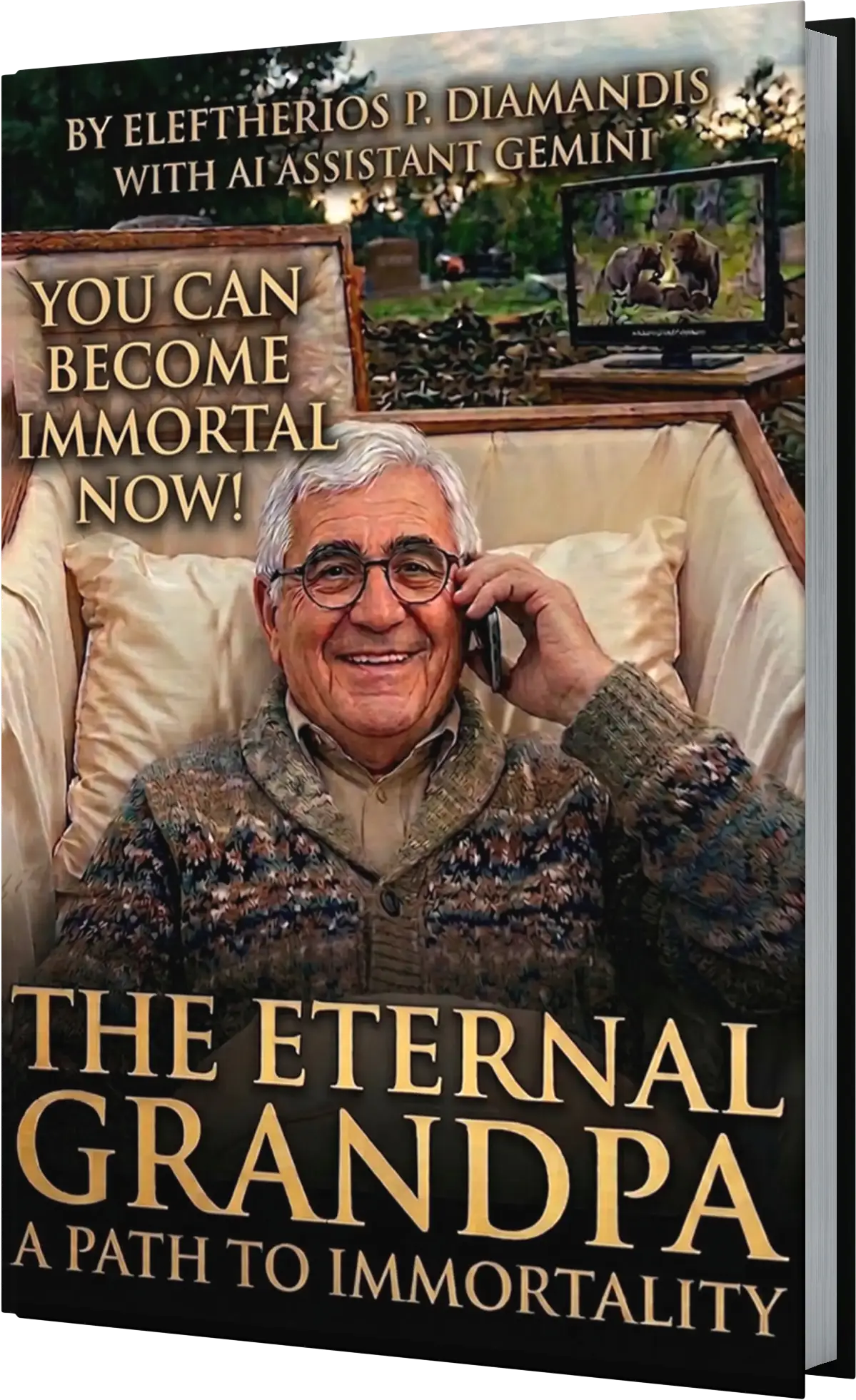
The Eternal Grandpa
A Path to Immortality
What if your body dies but your story doesn’t?
What does it really mean to become immortal?
In The Eternal Grandpa: A Path to Immortality, scientist and clinical biochemist Eleftherios P. Diamandis takes readers on an unconventional journey through aging, mortality, longevity science, artificial intelligence, medical diagnostics, and the possibility of preserving a human legacy beyond biological life.
Part scientific reflection, part satire, part philosophical adventure, this book challenges the modern obsession with defeating aging and asks a different question:
If biological immortality remains out of reach, can technology help us preserve something of the person we were?
Drawing on decades of experience in laboratory medicine, cancer biomarkers, genomics, proteomics, and clinical diagnostics, Diamandis examines the promises and limitations of modern longevity research. He explores the growing world of multiomic testing, preventive medicine, medical imaging, biomarkers, and the enormous gap that can exist between technological promise and clinical reality.
Then the book takes an unexpected turn.
Working with an AI co pilot, the author explores digital identity, digital legacy, AI powered memory, and the possibility of creating an enduring digital representation of a human being, a kind of technological “Grandpa” capable of communicating ideas, stories, humor, values, and memories with future generations.
Along the way, the book moves from laboratories and longevity clinics to family life, music, tennis, swimming, baseball, Christmas, grandchildren, and the everyday experiences that make a life meaningful.
It is serious about science but refuses to take the pursuit of immortality too seriously.
The Eternal Grandpa asks whether the ultimate form of immortality might not be living forever, but leaving something behind that continues to think, communicate, teach, laugh, remember, and connect generations.
For readers fascinated by longevity, aging, artificial intelligence, medical science, digital legacy, human mortality, and the future of technology, this is an unusual journey into one of humanity’s oldest dreams:
What if we could live forever?